Finding Meraki: Becoming Greek By Proxy
The first time I encountered Meraki, I didn’t have a name for it—I simply witnessed it in the Caldbeck home. It was the summer of 2017 when my stepmom Kelly’s Greek family opened their doors and hearts to my dad and me. I was a newcomer to their traditions, an observer at first, but they never once made me feel like an outsider.
Meraki, I would later learn, describes the soul and love poured into everything you create—a concept so deeply embedded in Greek culture that it doesn’t need to be spoken; it simply exists in the doing. I saw it in Kelly’s mother’s hands as she carefully folded dolmades, grape leaves stuffed with a perfect mixture of rice and herbs. Each fold was deliberate, each roll tight enough to hold together but gentle enough not to tear the delicate leaves. “This is how my mother taught me,” she would say, inviting me to try my hand at the ancient technique.
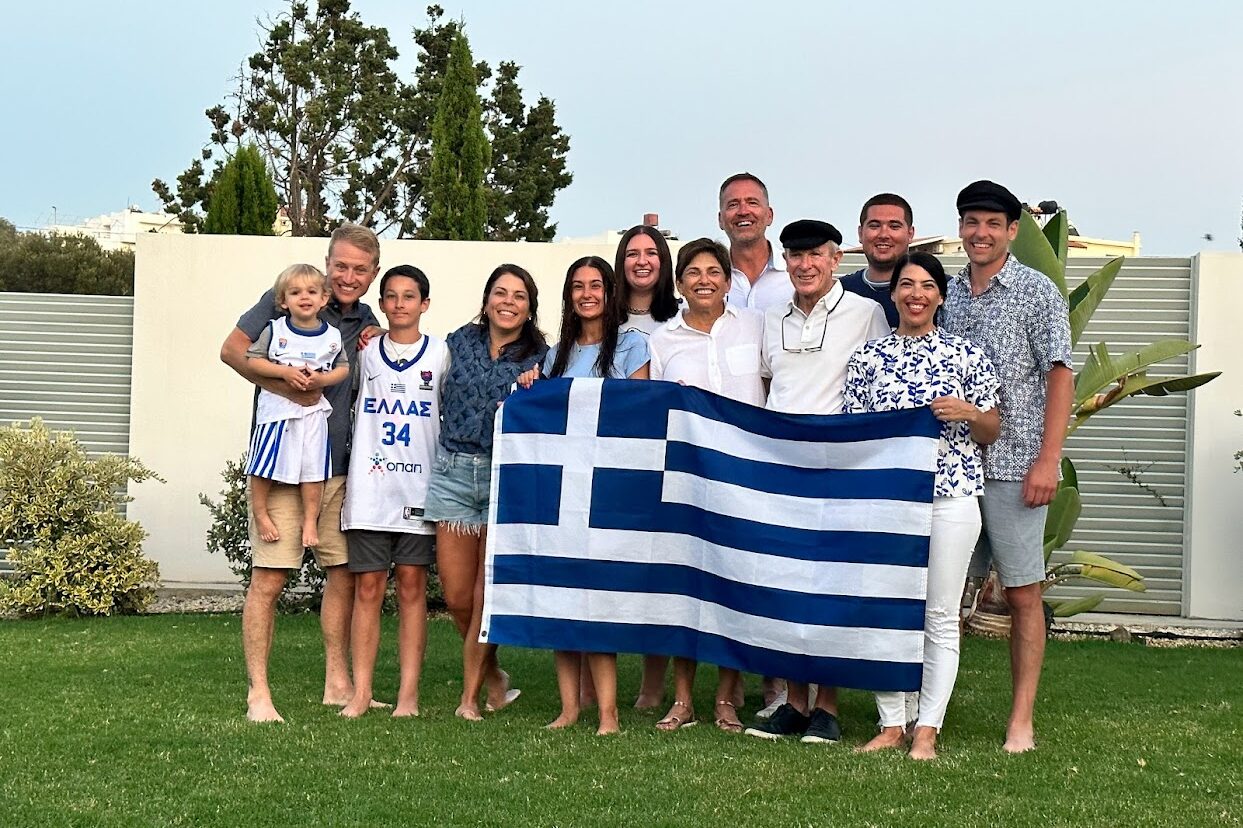
I call myself “Greek by proxy” now, a term that always makes the Caldbecks laugh with approval. Though we didn’t share blood, they showed me that family is built through shared moments and transferred traditions. After Kelly and my dad married in October 2020, these connections only deepened, creating bonds more meaningful than many I’d experienced in my biological family circles.
What fascinates me most about Meraki is how it transforms ordinary tasks into expressions of love. Sunday dinners at the Caldbecks’ aren’t just meals; they’re ceremonies of togetherness. The table setting isn’t just functional; each placement has purpose and history. Even the way Kelly’s father pours wine—with a slight theatrical flourish and a story about the vineyard—carries the essence of Meraki. These aren’t performances for guests; they’re how life is lived when you believe that how you do something matters as much as what you do.
Through the Caldbecks, I’ve learned that Meraki isn’t about perfection; it’s about presence. It’s taking the time to put a part of yourself into the simplest actions—whether preparing food, arranging flowers, or simply setting the table for family dinner. In a world obsessed with efficiency and shortcuts, there’s something revolutionary about this intentional infusion of self into everyday actions.
The Caldbecks have been more family to me than most of my blood relatives. They’ve taught me that family isn’t just who you’re born to—it’s who opens their traditions to you, who takes the time to show you another way of being in the world. Through them, I’ve gained not just a new family but a new lens through which to view life’s simple pleasures and daily tasks.
This is perhaps the greatest gift of Meraki—the understanding that when we pour ourselves fully into our actions, we create connections that transcend conventional boundaries. We create family where there was none before. We transform the ordinary into something sacred, something worth passing down through generations—even to those who come to the tradition not by birth, but by the more meaningful path of an open heart.